
The first piano lesson can feel like a lot of pressure for teachers… what do you teach first?
After years of trial and error, I’ve landed on a simple first lesson routine that helps students feel successful right away.
In my studio, the goal of the first lesson isn’t to cover everything—it’s to build confidence, connection, and a strong foundation. I want new students to leave their first lesson feeling successful with an instant win. I also want them to be excited to come back for more. And, I want to make sure they have fun and feel comfortable in my studio.
Here’s what a typical first piano lesson looks like in my studio:
1. Get a piano book, bag and binder.
I include the cost of materials in my annual enrollment fee. We get every student set up with these supplies at their first lesson, then all of their future books and supplies are also included.

We show students how their piano bag will hold all of their Piano Progress Pins which creates some anticipation about what’s to come in piano lessons.
You can get your own stash of piano bags and Piano Progress Pins in the Very Piano Shop. I highly recommend keeping these on hand to keep students organized from the start! Get them here.

Their binder holds all of the assignment pages they’ll need for the year and we immediately get them used to the rhythm of starting new assignments, checking off daily practice and using their assignment page to report back to their teacher the following week.
2. Learn Hot Cross Buns by Rote
My goal in the first lesson is to get students playing a real song right away—and Hot Cross Buns is perfect for that.
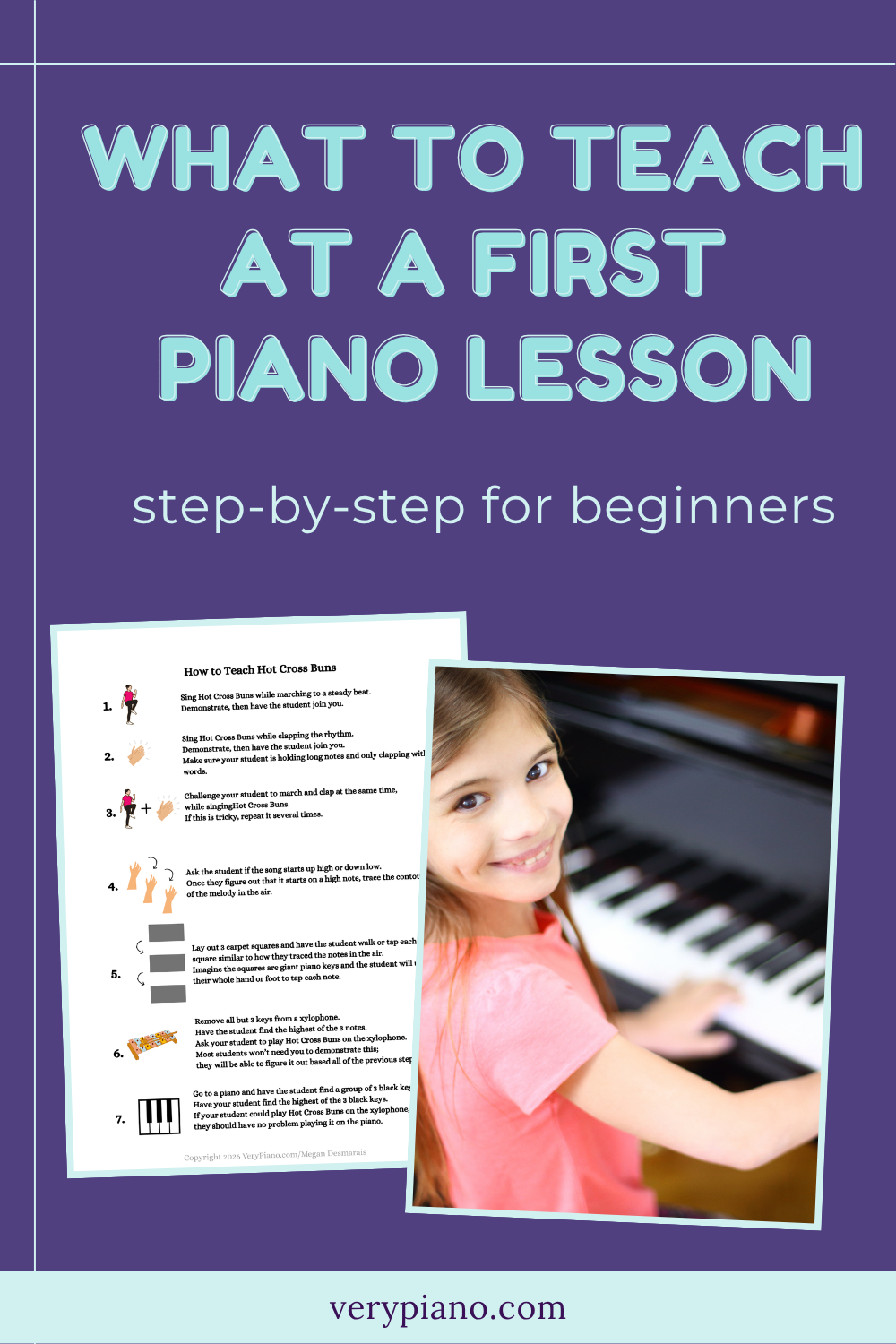
I’m big on teaching concepts and patterns before notation. I use a really specific process to teach Hot Cross Buns to students by rote that gets them learning all of the learning foundational musical concepts like steady beat, musical contour, and rhythm—without needing to read music yet.
I use this same process in my preschool music classes (except it takes much longer with preschoolers!) With a new, beginning piano student who’s 5-8 years old, we can work through the 7 easy steps in about 10 minutes and then they can instantly play Hot Cross Buns correctly on the piano! They’re usually really excited to have figured out a song so quickly.
If you want to see exactly how I teach this step-by-step, you can grab my free Hot Cross Buns teaching guide below.
3. Play Rhythm Jenga
I love to teach important concepts away from the piano so that when a student is ready to learn at the piano, there’s already a foundation of knowledge to work with. In my studio, Rhythm Jenga is a staple activity that we use to learn and practice rhythms. You can read all about how we play this game in this blog post.

The goal with Rhythm Jenga is to help familiarize students with the notes that they’ll begin to see in their lesson book in the coming weeks.
4. Dive into their new piano book
Many students are hungry for more after learning Hot Cross Buns, so we often learn another song or 2 from their lesson book. We use the Way Cool Keyboarding books from Pedagogy in Motion. All of the songs in these books are meant to be played with audio files. We show students the first song and teach them to play along with audio right from the start.
The first song in the Way Cool Keyboarding has many concepts that transfer from Hot Cross Buns, so it’s a natural progression.
This step is always optional. With really young beginners, I find that Hot Cross Buns is just right for the first lesson. Usually older students are excited for more, though!
5. Read Handy Houses
This is another optional step, but one that I like to include if we have time.

This post may contain affiliate links, which means I may earn a small commission at no extra cost to you.
If you haven’t used Handy Houses in piano lessons, this is your sign! It’s a really clever story that teaches students how to find their way around the white keys on the piano. Like Rhythm Jenga, this activity prepares students for content that they’re going to encounter in a coming piano lesson. Introducing it in this way makes it really accessible. When this material shows up in their book in a few weeks, they already know the material!
The first piano lesson doesn’t have to be complicated. With a simple, thoughtful routine, you can help students feel confident, successful, and excited to come back.
And when students leave their very first lesson saying, “I can play a song!”—that’s a win for everyone.

